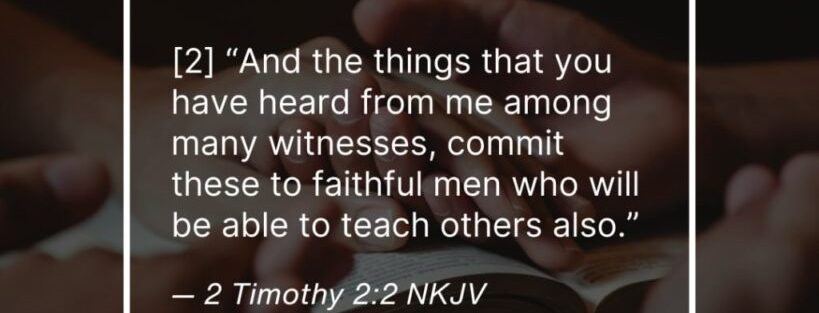
As we continue exploring the biblical principles of becoming ruler over many, we pay particular attention to the characteristics of a faithful disciple, as taught by the Apostle Paul to Timothy, his son in the faith. Scripture teaches us that God does not entrust greater responsibility solely on the basis of gifts, talents, or potential. Instead, He looks for those who faithfully steward what is already in their hands. In 2 Timothy 2, Paul uses three illustrations – a soldier, an athlete, and a farmer – to teach that faithfulness is demonstrated through endurance, discipline, and patience. These qualities are essential for those entrusted with responsibility in ministry, and they are equally valuable in the marketplace, where faithful stewardship can prepare us for greater responsibility and promotion. Saints, if we desire to be made ruler over much, we must first be faithful with what God has already entrusted to us.
Having identified the importance of entrusting God’s work to faithful men (vs.2), Paul highlights the first quality of a faithful disciple: endurance. He writes, “You therefore must endure hardship as a good soldier of Jesus Christ” (vs.3). A soldier understands that the assignment comes with responsibility and, sometimes, hardship. Having been enlisted for a cause greater than himself, he cannot abandon his post simply because circumstances become uncomfortable, or the assignment no longer appealing. Likewise, we must remain committed to God’s calling and continue pressing toward the mark of our calling in Christ Jesus (Philippians 3:14), even when it requires sacrifice. Paul further warns against becoming entangled in civilian affairs at the expense of our Kingdom assignment, saying, “No one engaged in warfare entangles himself with the affairs of this life, that he may please Him who enlisted him as a soldier” (2 Timothy 2:4). This does not mean neglecting our everyday responsibilities, but rather keeping the things of God a priority and refusing to let competing interests distract us from our calling. A good soldier also understands the importance of following instructions and submitting to authority. Likewise, we must also remain teachable, able to receive correction with humility rather than insisting on our own way, and steadfast in our service to God, even when the process challenges us.
The Apostle Paul then uses an athlete to highlight another quality of a faithful disciple: discipline. He writes, “And also if anyone competes in athletics, he is not crowned unless he competes according to the rules” (vs.5). An athlete understands that success requires more than talent; it takes discipline, diligence, consistency, and a willingness to abide by the rules. As disciples of Christ, we must remain obedient to God’s Word, even when doing so costs us. We cannot expect Kingdom rewards while disregarding Kingdom principles, or expect spiritual growth while choosing obedience only when convenient. Just as an athlete understands that the rewards of diligence and consistency are not instant, we too know that faithfulness is tested over a long period of time. The Christian journey is not a sprint but a race that requires us to persevere, even when progress seems slow.
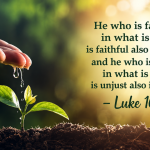
Finally, Paul turns to the farmer, whose example teaches us the importance of patience. He writes, “The hardworking farmer must be first to partake of the crops” (vs.6). The farmer understands that there can be no harvest without sowing, labour, and time. After planting, he continues tending the field, even when the results are not yet visible. He understands that beneath the soil, roots develop to anchor the plant and absorb the necessary nutrients before the shoot emerges and eventually bears fruit. Likewise, God often develops our character and prepares us for greater responsibility through ordinary, seemingly uneventful seasons. We must not despise these seasons or abandon our assignment simply because the harvest has not yet appeared. Instead, we continue to labour diligently, trusting that the process has value even when its fruit is not yet visible. Saints, the principle of seed, time, and harvest cannot be broken (Genesis 8:22).
It is important to remember that even if we have not fully developed these qualities of endurance, discipline, and patience, we still have an opportunity to cultivate them and grow in faithfulness. Consider John Mark in Acts 15:36-40. Paul was reluctant to take him on another ministry journey because he had previously withdrawn from the work. Barnabas, however, gave him another opportunity, and later Paul acknowledged that Mark was useful for ministry (2 Timothy 4:11). This reminds us that past failures do not have to determine our present or future; we can still course-correct. Let us remain teachable and refuse to let past mistakes define us. Instead, let us allow God to develop these virtues in us so we can become more profitable in His Kingdom. Hallelujah!
Prayer
Heavenly Father, it is a privilege to serve You through the assignments You have entrusted to us. Help us cultivate endurance, discipline, and patience, so we may faithfully steward what You have put in our hands. Where we have fallen short, we thank You for Your mercy, and for correcting us in love, so we can become increasingly useful to the Kingdom agenda. In Jesus’ name, Amen.