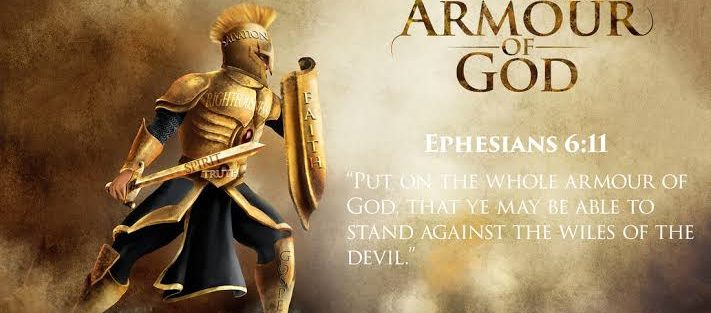
As we continue learning how to be effective in spiritual warfare, this week we focus on the shield of faith. The Apostle Paul exhorts us: “Above all, taking the shield of faith with which you will be able to quench all the fiery darts of the wicked one” (Ephesians 6:16). God has given us faith as a defence against the enemy’s attacks and as a means of responding to His Word beyond what our natural senses can perceive. Faith gives us access to the unseen, and it enables us to hold on to the reality of what God has spoken, even before we see its manifestation. This is why Scripture describes faith as “the substance of things hoped for, the evidence of things not seen” (Hebrews 11:1).
The patriarch of faith, Abraham, demonstrates this clearly. We read: “God brought him outside and said, ‘Look now toward heaven, and count the stars if you are able to number them … So shall your descendants be’ ” (Genesis 15:5). Although Abraham could not yet see the fulfilment of the promise, “he believed in the Lord, and God accounted it to him for righteousness” (vs.6). Abraham was not trying to persuade God to do something He had not said; he simply believed what God had already spoken. Likewise, our faith is a response to what God has already provided by grace. Scripture tells us that “God has dealt to each one the measure of faith” (Romans 12:3). The question, therefore, is not whether we have faith, but whether we are exercising it. Like a muscle, faith becomes stronger through use, particularly when we continue trusting God through seasons of waiting. Faith therefore affects not only what we believe, but also how we understand reality. “By faith we understand that the worlds were framed by the word of God, so that the things which are seen were not made of things which are visible” (Hebrews 11:3). Faith enables us to see beyond the natural realm, to interpret life’s circumstances from God’s perspective, trusting His truth above what our natural senses perceive.
But faith is not merely an internal conviction – it produces a response. We see this in the account of the woman with the issue of blood in Mark 5. After suffering for twelve years and having spent everything she had seeking healing, ”when she heard about Jesus, she came behind Him in the crowd and touched His garment. For she said, ‘If only I may touch His clothes, I shall be made whole’ ” (vs.27–28). Her faith was intentional, and although many were pressing around Jesus, she approached Him with expectation, believing that her encounter with Him would bring wholeness. Her faith moved her to act, even though doing so meant breaking protocol according to the law. She did not remain passive, but acted on what she believed. And when she touched Jesus, “immediately the fountain of her blood was dried up, and she felt in her body that she was healed of the affliction“ (vs.29). Hallelujah! Although the crowd was pressing around Him, Jesus recognized that someone drew virtue from Him in the spirit: “Immediately knowing in Himself that power had gone out of Him, He turned around in the crowd and said, ‘Who touched My clothes?’ ” (vs.30). But the disciples responded from what they could see naturally, saying “You see the multitude thronging You, and You say, ‘Who touched Me?’ ” (vs.31). However, Jesus soon recognized who had touched Him and said to the woman, “Daughter, your faith has made you whole. Go in peace and be healed of your affliction“ (vs.34).
Saints, God’s grace is freely available, but we must respond to that grace by faith. Scripture tells us that “he who comes to God must believe that He is, and that He is a rewarder of those who diligently seek Him“ (Hebrews 11:6). Faith approaches God with expectation, believes His Word, and acts accordingly. It also perseveres; we do not abandon or shipwreck our faith simply because we do not see immediate results. Faith enables us to stand on God’s Word when circumstances appear contrary to God’s promises. Faith does not deny what we see; rather, it refuses to make what we see greater than what God has spoken. So like Abraham, we continue believing while we wait; like the woman with the issue of blood, we continue pressing forward with hope and expectation, trusting that God’s grace has already made provision for everything we need.
Prayer
Heavenly Father, thank You for giving each of us the measure of faith. Teach us to exercise this faith, trusting Your Word beyond what we can see or understand naturally. Help us to respond to Your grace with obedience, perseverance, and expectation, never allowing circumstances to become greater than Your promises. In Jesus’ name, Amen.